




New research from Cynozure reveals gaps in data and AI ownership, measurement and accountability as leaders head into 2026. As it stands, under two-fifths of AI leaders currently visualise the impacts of the technology on their firms in terms of currency.
2026 is seeing a landmark shift in investment priorities in the UK. After years of pressure to get onboard the ‘revolutionary’ technology of AI, results remain muted at best. In the last year, a string of reports suggest that firms may be overestimating the levels of innovation they are achieving; and that they may not have the mechanisms in place to measure the actual returns on investment accurately.
Meanwhile, a now infamous MIT study found fewer than one-in-ten firms investing in AI had enjoyed a return on investment. And at the turn of the year, PwC analysis further showed that 56% of CEOs now believe they have seen “no benefit” from funnelling funds into technology.
Source: Cynozure
It is clear that if a company is going to secure buy-in on future AI-transformation pitches, then, there will need to be a change as to how leaders manage and quantify the actual material impacts of the technology. But even as talk of an ‘AI-bubble’ persists into the new year, a fresh study of 60 senior data and AI leaders by Cynozure suggests that they have missed that memo.
Budget and resource constraints remain the biggest blocker to future AI-adoption, according to the study. A 25% portion of smaller organisations said this was the leading factor – and while larger organisations said they were primarily more likely to be held back by legacy technology, at 20%, 17% also cited a lack of executive or organisational buy-in. But the necessary measures to secure that buy-in continue to elude most.
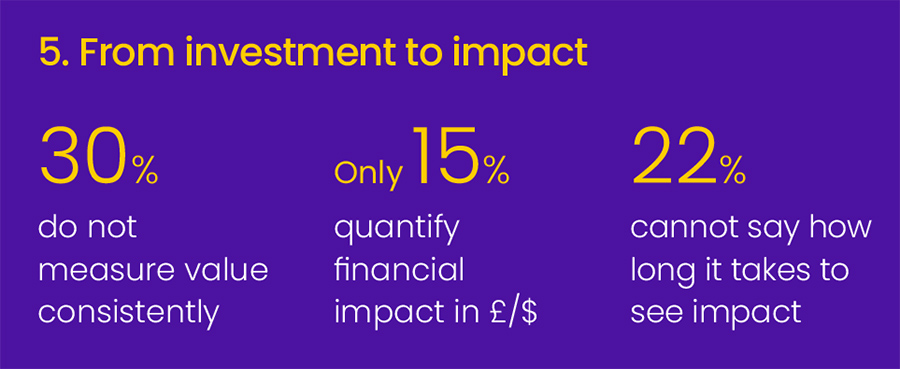
A 30% portion of organisations do not measure the value of data and AI tools consistently. Worse, only 15% made the effort to quantify the impact of data and AI into pounds or dollars – leaving it unclear what impact hefty investments into those areas are actually worth – and whether they are actually having a positive impact on business performance. To show that budget for AI investments is worth prioritising still, and gaining or retaining executive buy-in, this has to alter.
Source: Cynozure
Jason Foster, founder and CEO at Cynozure, warned, “The challenge now is not whether organisations can use data and AI, but whether it is making a meaningful difference to the firm’s profit and loss statement. Many teams have invested heavily in platforms, teams and experimentation, but still struggle to evidence impact. The organisations that pull ahead in 2026 will be those that treat data and AI as a portfolio of products, tied to outcomes and measured with strong investment and commercial discipline.”
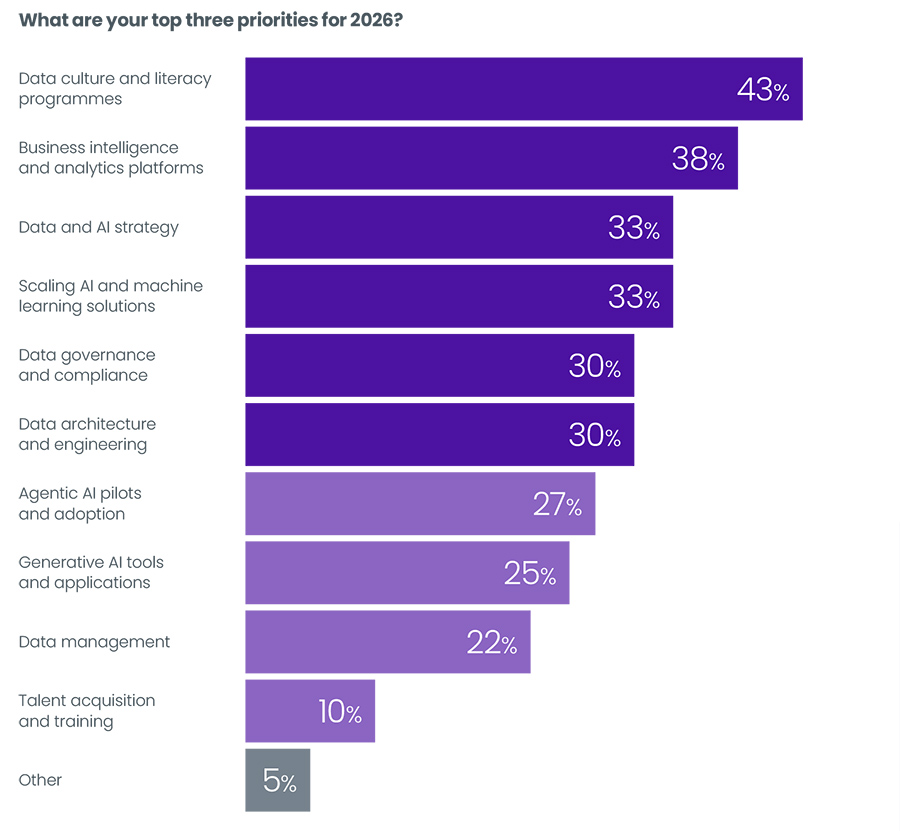
To that end, Cynozure did find that firms are beginning to see the light. Data culture and literacy is the number-one priority for 2026, cited by 43% of leaders, reflecting growing recognition that without a workforce that understands and trusts data, investment in analytics and AI will not deliver impact. Meanwhile, 38% said they were also prioritising business intelligence and analytics platforms – which could also help to highlight performance gains resulting from digital transformation projects.
But to ensure that this materialises in a coherent and actionable way, organisations will need to also reconsider whose responsibility it is to champion AI within their firm. Cynozure also showed that AI strategy ownership remains fragmented, with 80% of organisations assigning data strategy to the CDO or head of data, but only 28% doing the same for AI; despite widespread AI adoption. With 40% still split ownership across multiple executives and 17% report no clear AI owner at all, this will likely continue to limit pace, alignment and impact – even with greater degrees of measurement for the technology’s performance.
Source link
#firms #quantify #financial #impact #data #pounds #dollars

