


KOLKATA: For decades, formal dialogue in Bengali cinema has been dominated by the colloquial Rarhi dialect of Nadia and Kolkata. The observance of International Mother Language Day on February 21 provided an apt occasion for many in Tollywood to examine how dialects are used—and misused—on screen.Bengali cinema has long carried a legacy of leaning on dialects to shape character, place, and social reality, treating speech not as ornamentation but as a core element of authenticity and performance. From rural landscapes to small-town milieus, speech patterns once functioned as a vital cinematic resource — an index of social history as much as of geography.In the older films, speech was not decoration. It was landscape. It was class. It was history carried in the mouth. Directors and actors treated dialect the way they treated light or music—something that could not be faked without the audience feeling the lie. Director Atanu Ghosh still remembered that era as a time when performers arrived with an “earthy connection” to their roots, and when group theatre had trained them to respect language as craft. “Earlier, many actors in Bengal had a deep, earthy connection to their roots, which made them fluent in local dialects. Many also came from group theatre, where dialect work was taken seriously. I still remember the dialects in Rajen Tarafdar’s ‘Ganga’ and ‘Palanka’—there was no compromise on authenticity. Even in Goutam Ghose’s ‘Padma Nodir Majhi’, actors like Utpal Dutt and Robi Ghosh were remarkably precise in their use of dialect,” he said.

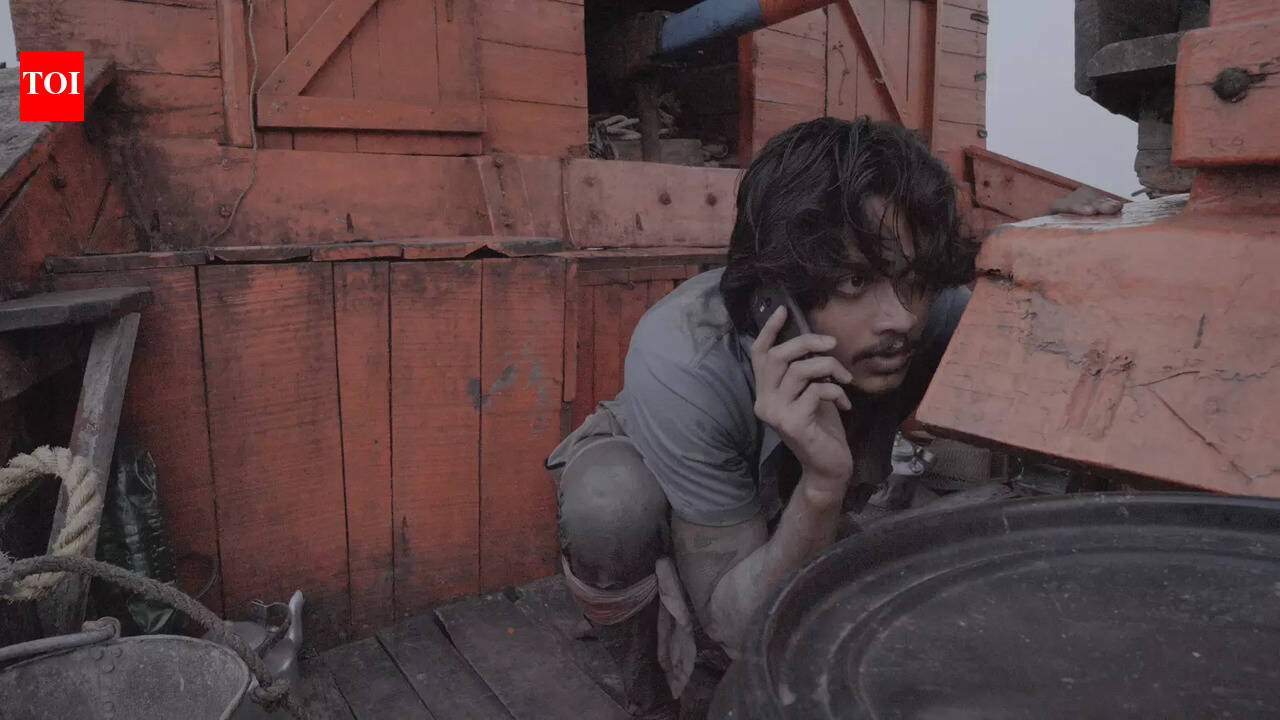
A still from ‘Nadhorer Bhela’
Actor Sudipta Chakraborty pointed to Ritwik Ghatak’s cinema as a benchmark for this authenticity. Ghatak, she noted, came from Bangladesh, spoke in his native dialect, and let his characters speak with the same truth. Against that standard, she feels contemporary Bengali cinema only occasionally gives dialects their due, citing works like Anirban Bhattacharya and Pratik Dutta’s ‘Mandar’ and Ranjan Ghosh’s ‘Adyama’ as rare examples. On Saturday, she remembered how precision can exist even without a marked regional dialect: in ‘Bariwali’, Rituparno Ghosh gave her character Malati a private idiom, a voice built from small, exact decisions —“Amita Bachan” instead of Amitabh Bachchan—proof that linguistic truth could be personal as well as regional, if the director cared enough to listen.So, has authenticity of dialect become an occasional aesthetic choice rather than a baseline responsibility in contemporary Bengali cinema? The problem with the use of dialects in Tollywood is its increasing urban gaze that leaves little room for dialects. In many city-centric films, dialect is reduced to a marker reserved almost exclusively for domestic workers within urban households. Some say, a certain directorial laziness has taken hold, propped up by peculiar justifications for not requiring actors to learn and perform authentic speech. When these dialects ring false and stand out jarringly, filmmakers often defend them with strained, even laughable logic. Some go so far as to claim the story unfolds in an imaginary terrain, and therefore any dialect will do—untethered to linguistic reality or cultural grounding. “I don’t think it’s ignorance or laziness. I’d attribute it to an attitude that looks down upon rural cultures and does not think it’s important to know them intimately. If you take genuine interest in them, only then will you be able to appreciate their uniqueness,” said the director of ‘Adyama’.Anuparna Roy, whose ‘Song of Forgotten Trees’ travelled to Venice, had made her first short film ‘Run to the River’ in 2021. It smelt of Purulia’s red earth. Her story lived sometime before the 1930s, and locals faced the camera, bringing their own speech with them. Roy is not impressed with the use of dialects in contemporary Bengali cinema. “When cinema erases dialect, it erases memory because language is not just how we speak, it is where we come from. Bengali cinema often claims realism, yet it keeps dressing every character in the same polished, elite Kolkata Bangla as if the rest of Bengal does not exist. When we ignore local dialects, we don’t just lose originality; we lose soil, class, politics, and pulse. A language flattened for comfort can never carry the truth of a region,” Roy said.Atanu Ghosh too has reservations of the way dialects are now used. “The dialect is often rendered crudely — less an authentic register than a distortion, an unresearched blend of Bengali spoken in various districts of West Bengal with traces of speech from Bangladesh,” he added. For those who care for language, this is a caricature of “the rural,” assembled from whatever sounds sufficiently non-urban to the filmmaker’s ear. And then, in the middle of this flattening, a different kind of work began to reappear—slow, difficult, accountable. Ranjan Ghosh set ‘Adamya’ in the Sundarbans, a story of a failed political assassination, and refused the industry’s favourite shortcut: the generic “Bengal village” dialect that pretends all rural places speak the same. He had seen that generalization before, and he called it not only inauthentic but ‘humiliating’. “I had to take care of the authenticity and not generalize the use of these dialects as some random ‘Bengal village’ language. I have seen such generalization of dialects and apart from losing authenticity, I feel it is deeply humiliating,” he said. During the pre-production of the film, he was aware of the “perils” of using the dialects spoken in the Sundarbans. “These dialects are influenced by rural speech patterns, with notable variations in pronunciation, vocabulary, and syntax. These regional forms are shaped by the isolation of the islands and the close-knit nature of local communities. We did workshops with the villagers during the four months of our shoot and incorporated their spoken dialects in the dialogues. Syntaxes, pronunciations, pauses between certain words, etc, were again guided by them. My aim was that when someone from the Sundarbans would watch the film, she or he should feel that it is their language spoken the way they do. We got the villagers to Kolkata to do their own dubbing. When the film released last week, a few of them had watched the film here. They had warm smiles on their faces and that was our biggest validation.”Pradipta Bhattacharya spoke of dialect as emotional truth—the way an audience recognises a world before it recognises a plot. He recorded real conversations, made actors listen, made them learn the rhythm rather than merely the words. “I followed this process for ‘Birohi’. For ‘Nadharer Bhela’, I got 80% to 90% of the dialect spoken in Tehatta – my village in Nadia – for some characters. Amit Saha and Kasturi Chatterjee spoke in the local dialect; for Kasturi-di, who is distinctly urban, it took several days of rehearsal to get the rhythm and pronunciation right. Dialect demands precision at the writing stage—dialogue has to be crafted with care—and then it comes down to practice and rehearsal. The challenge is that actors often can’t spare six months to prepare, and budgets rarely allow for that kind of time. The other problem is when audiences accept whatever is presented, many stop investing the effort that dialect work truly requires,” Bhattacharya added. On International Mother Language Day, the question hanging over contemporary Bengali cinema was not whether dialects should be used, but how. Used well, dialect returned people to their place in the world, restoring the grain of region and the dignity of specificity. Used badly, it became a tool of convenience — either erased in the name of urban polish or distorted into a humiliating, placeless noise. Between those two choices lies the real work: listening, researching, rehearsing, and admitting that a mother tongue is not a single tongue at all, but many—each carrying its own memory, each demanding to be heard without being turned into a joke.
Source link
#Authenticity #caricature #Bengali #cinemas #lovehate #relationship #dialects #Kolkata #News #Times #India

