



Ramkrishna Forgings Managing Director Naresh Jalan and Pearl Global MD & Group President Pallab Banerjee shared their outlook on how the revised US tariff framework could affect business in the coming quarters.
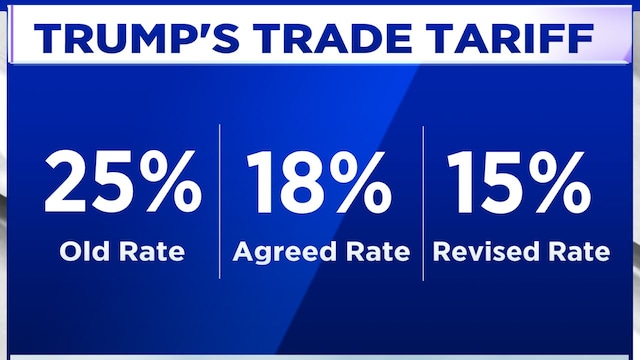
Banerjee, representing the textile and apparel industry, described the situation as one of continued unpredictability. He clarified that while Indian goods were previously subject to a 25% tariff, a much-discussed 18% rate never actually came into effect. The new 15% tariff, to be levied under Section 122, will be applied on top of the existing Most Favoured Nation (MFN) duty.
For cotton apparel exports from India to the US, the MFN rate averages around 15-16%. “On top of it, this section 122 tariff which will be another 15% will get added,” Banerjee explained, indicating an effective total tariff of approximately 30%.
He noted that the tariff move is not large enough to trigger aggressive front-loading of shipments.
“If the delta had been higher, because then it made sense for capital sector. If you look at it, 18% to 15%, it’s only 3% difference,” Banerjee said.
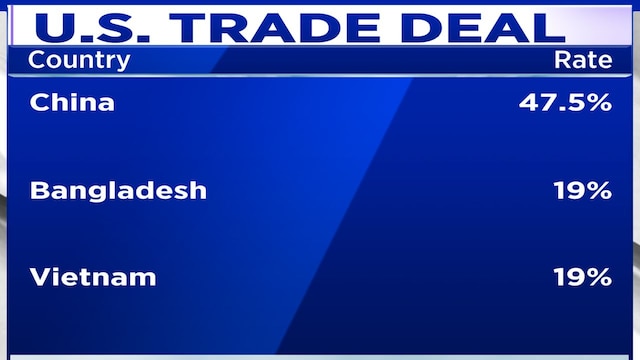
Currently, cotton garment exports from India attract MFN duty of around 15–16%, plus the additional Section 122 levy of 15%, taking the effective rate close to 30%. However, this applies across competing nations such as Bangladesh, Vietnam and Indonesia, creating a temporary level playing field for about 150 days.
Shifting the focus to the auto components sector, Jalan noted that their products fall under a different regulation, Section 232, which imposes a 25% tariff.
Jalan said about 15% of Ramkrishna Forgings’ revenue is exposed to the 25% rate, while around 5% of revenue falls under the 15% category for non-auto engineering parts.
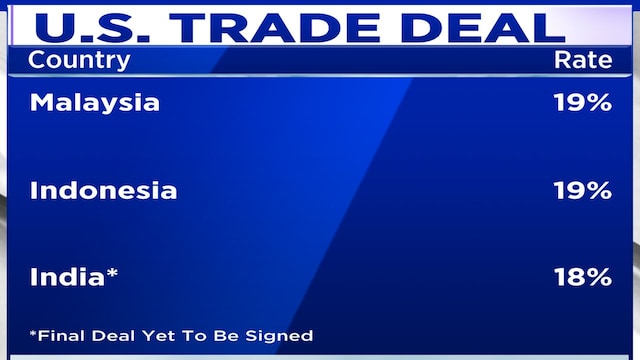
The company was expecting concessions under the proposed India US trade deal but is now waiting for clarity in the fine print.
“We will need to look at the fine print. But as such, I think that becomes not very significant right now, because the US industry of late, in last quarter onwards, has started doing extremely well in terms of commercial vehicle market,” Jalan said.
He added that stronger demand in the US commercial vehicle market and upcoming emission norm changes could lead to front-loading of purchases over the next few quarters. This may cushion the impact of tariffs in the near term.
On potential tariff refunds, Jalan indicated that exporters will need to file claims. However, the process may take months and is likely to face legal challenges. If refunds are received, they would have to be passed back to customers.
Also Read | Trump adds a 10% tariff on all imports three days from now
Source link
#tariffs #add #uncertainty #textile #auto #exporters #Industry #leaders #CNBC #TV18

