


In the 1800s and early 1900s, upper- and middle-class European women were expected to smell naturally clean, not “perfumed”. Strong perfumes on a woman were often associated with actors or courtesans, whom society put in a “morally questionable” category.
Then came “Chypre”, Francois Coty’s 1917 creation — one of the most influential perfumes in history. Emerging during World War I, as women moved into factories and public life, its stark blend of bergamot, oakmoss and labdanum rejected the previous era’s decorative florals. Discontinued in the 1960s, it can be encountered today at rare places, such as the Osmothèque, a private perfume conservatory in Versailles, France. Across geographies, perfume museums such as this are preserving notes through time.
Guerlain, Paris
The Guerlain flagship at 68 Avenue des Champs-Élysées in Paris is as much a cultural landmark as it is a boutique. Established in 1914 within a historic townhouse, now a listed monument, the space has long served as the heart of the house’s creative and commercial identity.
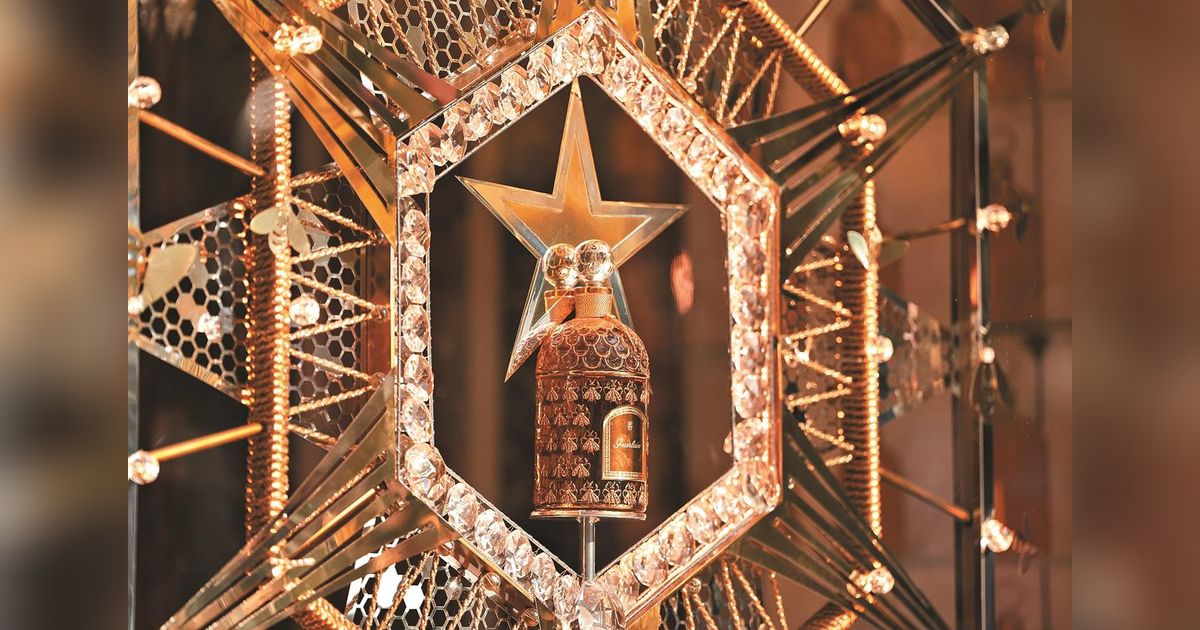
Visitors come to explore iconic fragrances such as Shalimar and Mitsouko, while taking in architectural details including Baccarat chandeliers and the famed “perfume organ” display. “Old perfumes of the 1920s and 1930s used Baccarat and Bohemian crystals because they were marked only for the elite class,” says fragrance expert Nikhil Sharan, who runs the YouTube channel Perfume Guru.
A key attraction is the personalisation atelier, where guests can engrave Guerlain’s signature Bee Bottles, customise flacons, and receive guidance on scent selection and layering, offering insight into how fragrances are conceived and tailored.
Musée du Parfum, Paris
Musée International de la Parfumerie, Grasse
Floris and Penhaligon’s, London
Founded in 1730 on Jermyn Street, Floris is the oldest English perfumery still in operation and has held royal warrants for nearly two centuries. The flagship retains much of its historic character, with mahogany cabinets, glass from the Great Exhibition of 1851, and archival displays of bottles and documents. Visitors can explore heritage fragrances such as No. 89 or book bespoke fragrance appointments, where a perfumer creates a personalised scent over sessions lasting several hours. These experiences typically begin at around £750, positioning the boutique as a living museum of British perfumery.
Osmothèque, Versailles Located within the campus of ISIPCA, a world-renowned perfumery school, Osmothèque is widely regarded as the foremost archive of fragrance. About a 10-minute walk from the Palace of Versailles, it has been presided over by Patricia de Nicolaï, founder of the niche brand, Parfums de Nicolaï. Visits are by appointment only, and guests are asked in advance about the types of perfumes they wish to experience. The focus is on preservation and education, on experiencing classic perfumery, says fragrance expert Nikhil Sharan. The Osmothèque has preserved original formulations of iconic fragrances including Guerlain Shalimar, Chanel No 5, Chamade by Guerlain, Miss Dior by Dior, and Fougère Royale by Houbigant.
Aftel Archive of Curious Scents, Berkeley
In Berkeley, California, perfumer and author Mandy Aftel’s Aftel Archive of Curious Scents offers an intimate alternative to traditional perfume museums. Opened in 2017, the archive, housed in a small backyard cottage, is widely regarded as the only museum in the US devoted specifically to natural perfumery. Inside, visitors encounter shelves of botanical extracts, resins, woods, and roots, many rarely encountered in contemporary commercial fragrances. Rather than finished perfumes, guests experience raw materials individually using blotters, allowing a deeper understanding of how scent is constructed.
Source link
#whiff #romance #Exploring #worlds #finest #perfume #museums

