


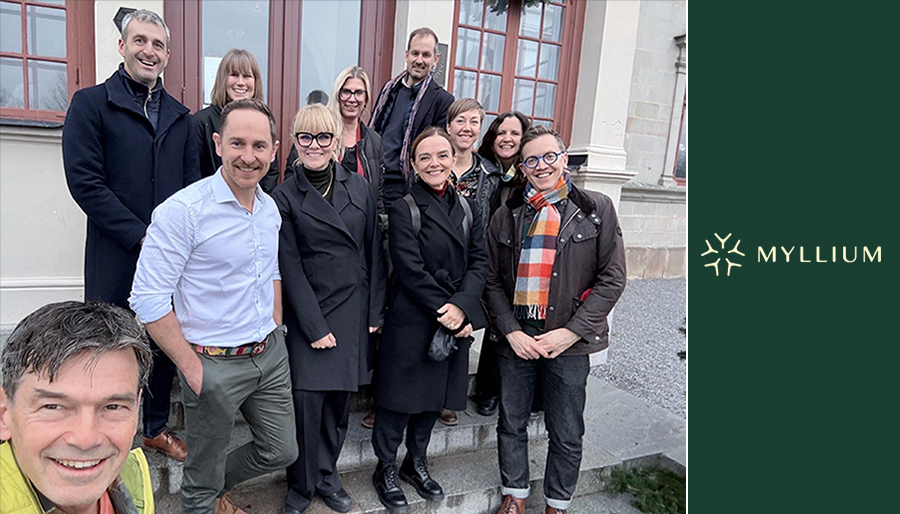
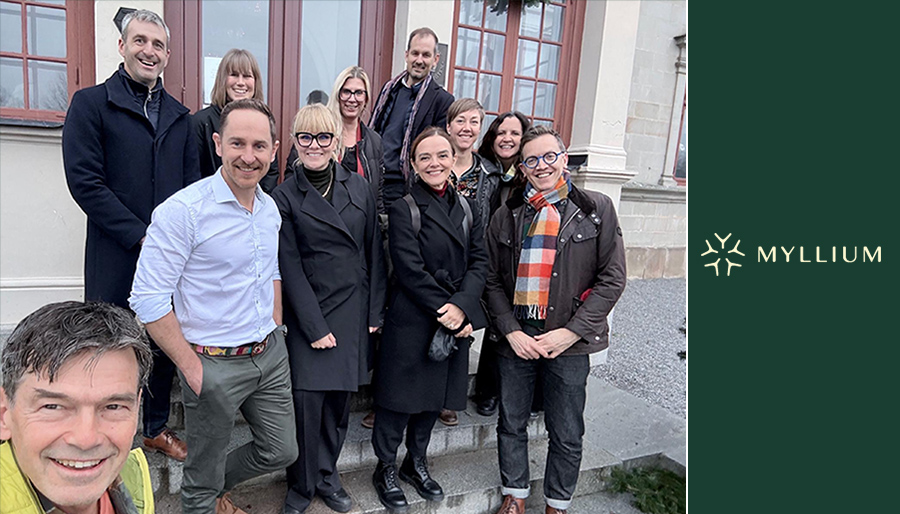
Seven European consultancies have partnered to address global nature challenges, under the new Myllium network. UK-based Tyler Grange is joined by compatriot firm The Ecology Co-op; Netherlands-based Altenburg & Wymenga; and Swedish advisories Ecogain, Calluna, EnviroPlanning and Örnborg Kyrkander to form a coalition of more than 400 experts, helping clients to execute complex projects that support people and the planet.
Katarina Walter, Group CEO of Myllium, and previously CEO of Ecogain, commented, “In forming Myllium, we’ve created a handpicked collective of the most expert firms and leaders in field – creating a powerful platform from which we can scale, share expertise, and provide the best science-based innovative solutions to increasingly complex challenges. By pooling our knowledge across disciplines and geographies, we’re perfectly positioned to support even the largest international clients, operating in an increasingly complex regulatory environment.”
The purpose of the group isn’t to centralise operations or merge revenues. Instead, like other cross-border networks of boutique and specialist firms, including the likes of Nextcontinent, the Myllium model allows member firms to scale when projects require broader expertise or larger capacity – to lead the likes of complex international projects.
Importantly, member firms will retain their own leadership team and brand – while becoming shareholders in Myllium. This helps to both benefit from the group’s “collective strength”, and preserve “each independent company’s identity and entrepreneurial spirit”, according to Walter. She added that increasing each firm’s collective impact while “remaining true to who we are” is “very important to us all.”
Collectivism with individual traits
Myllium derives from the Nordic word mylla, meaning fertile ground, and echoes the root-like structure of mycelium – the networks that connect many parts into a stronger whole. As the group looks to meet an increasing global demand for advanced ecological expertise – driven by evolving regulation, rising investor expectations and acknowledgement that biodiversity risk can directly impact businesses – the group combines more than 400 specialists from seven businesses across Europe, to share innovation and experience in methodology, data and technology.
UK consultancies Tyler Grange and The Ecology Co-op will now work alongside Dutch firm Altenburg & Wymenga, and Swedish companies Ecogain, Calluna, EnviroPlanning and Örnborg Kyrkander, to provide a platform for experts in ecology, arboriculture, landscape planning, green infrastructure design and sustainability to collaborate, scale and create greater value together. And looking ahead, more likeminded specialists are “expected to join the expanding Myllium collective soon”, a release from the collective suggested.
When clients could benefit from cross-border collaboration or access to additional specialist competencies within the group, Myllium will bring these capabilities together in a structured way. Tyler Grange and The Ecology Co-op have already assembled a joint project bid and there are many others underway, for example. Collaboration within the group will always be client-driven and project-specific and, in many cases, each member business will continue to operate entirely independently.
Tyler Grange’s Managing Director Jon Berry said of his own firm’s involvement, “We’re absolutely delighted to join Myllium, as a founding member. We’ve been in talks with the network for a while and, along with the other companies, we’ve helped to shape what are now our collective values, vision and direction, which are very closely aligned to those we’ve lived by, for over 15 years, at Tyler Grange. By coming together, we’re more strategically placed to influence people and the planet and to achieve our ambitious five-year strategy. It will be business as usual at Tyler Grange – but even better. As it says on Myllium’s website: “We’re rooted. We’re collective. And it will be wild.”
Biodiversity risk
Clarifying some of the ways biodiversity risk can directly impact businesses, Berry also noted that every business “impact and depend on nature”. With World Economic Forum data showing that more than 50% of global GDP is moderately or highly dependent on ecosystem services such as pollination, water regulation and soil fertility, it is a factor which can no longer be ignored.
He continued, “When ecosystems break down, businesses are directly affected – through the likes of supply chain disruption, water scarcity, declining raw material availability, increased insurance costs, project delays and rising regulatory scrutiny. Simply put, natural capital – that’s the habitats and ecosystems that provide social, environmental and economic benefits to humans – is business capital.
“Biodiversity risk is no longer considered a niche environmental concern, but a growing systemic risk to economies, supply chains, and financial stability. These are just some of the many reasons why we’ve come together, within the international Myllium network.”
Source link
#Myllium #launches #international #group #nature #sustainability #experts

