


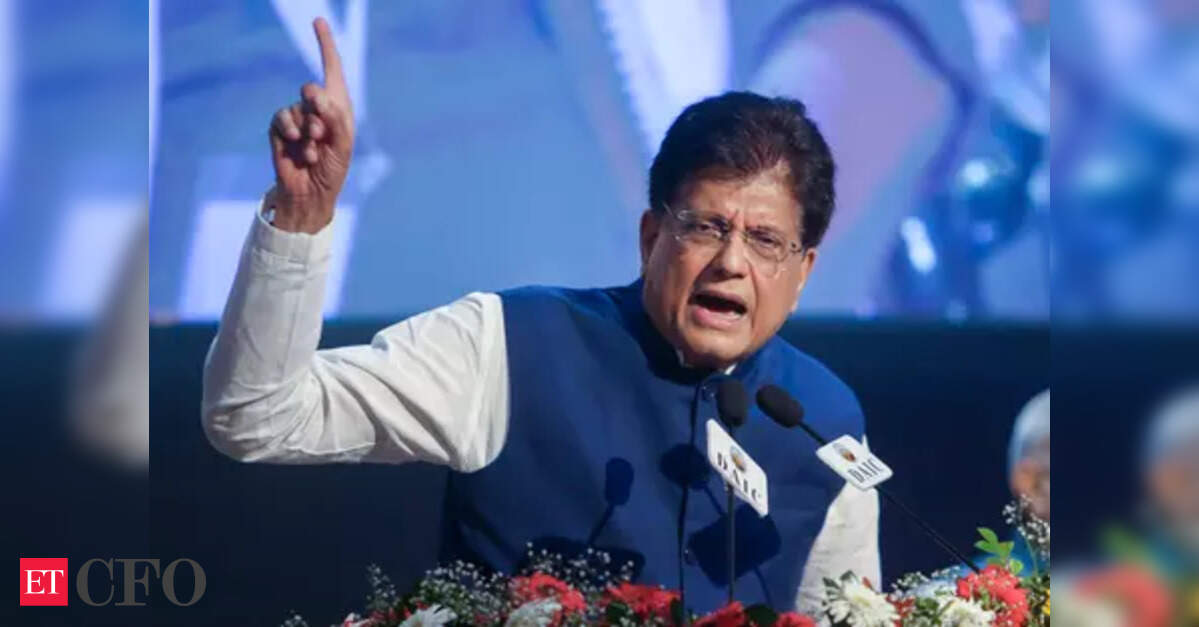
India on Friday announced a series of seven measures aimed at boosting outbound shipments, with a special focus on micro, small and medium enterprises (MSMEs) and emerging export markets. The initiative comes under the ₹25,060-crore Export Promotion Mission (EPM), launched by Commerce Minister Piyush Goyal.
“It is the power of 1.4 billion Indians that encourages us to look at a 25,000 crore rupee export promotion mission,” Goyal said, framing the programme as part of India’s broader economic transformation. “The center stage of an evolved future, not only for India but for the entire world. This is going to set the platform on which we will see rapid and inclusive growth for India and all Indians. This will provide opportunities to our young men and women.”
Also Read: Pax Silica pact: India plugs into US tech alliance to secure chips, AI and critical minerals
The mission, announced in the Union Budget 2025–26, is designed to consolidate multiple export-support schemes under one framework, making processes simpler, digitally driven, and more accessible. Spread over six years, it aims to reduce costs, address logistical challenges, and open new opportunities for exporters beyond traditional hubs.
Credit support for digital exporters
To encourage exporters using online channels, the government has introduced two main credit facilities:
Direct E-Commerce Credit Facility: Provides up to ₹50 lakh in support, backed by a 90% guarantee, giving smaller exporters easier access to funds.
Overseas Inventory Credit Facility: Offers up to ₹5 crore, with 75% guarantee coverage and an interest subvention of 2.75%, capped at ₹15 lakh annually. This helps exporters maintain inventory abroad and manage international sales efficiently.
These measures are aimed at lowering financing hurdles and improving cash flow for e-commerce exporters.
Affordable working capital through export factoring
MSMEs often face challenges in managing short-term working capital.
To address this, the government will provide an interest subvention of 2.75% on export factoring transactions handled through RBI- or IFSCA-recognised entities. Assistance is capped at ₹50 lakh per MSME annually and processed digitally for transparency and speed. This allows smaller exporters to convert invoices into immediate cash without relying on traditional loans.
Access to new and high-risk markets
The government is supporting exporters looking to enter new or challenging markets through instruments like confirmed Letters of Credit and credit enhancement schemes. This helps reduce the financial risks associated with international trade, particularly in markets where India has limited experience or higher default risks.
Compliance and certification support (TRACE)
Meeting international quality standards can be expensive for exporters. The Trade Regulations, Accreditation and Compliance Enablement (TRACE) programme reimburses part of the costs for testing, inspection, and certification. Exporters can claim:
60% reimbursement under the Positive List
75% reimbursement under the Priority Positive List
The annual ceiling is ₹25 lakh per export entity. This support helps businesses meet global standards, making Indian products more competitive overseas.
Also Read: India-EU FTA to open new avenues for trade, investment: PM Modi, Greek counterpart
Overseas logistics and warehousing (FLOW)
Exporters will gain access to overseas warehouses and fulfilment infrastructure, including e-commerce export hubs connected to global distribution networks. The Facilitating Logistics, Overseas Warehousing and Fulfilment (FLOW) programme provides up to 30% support for approved project costs over three years, subject to MSME participation norms. This reduces shipping delays, improves delivery reliability, and lowers overall logistics costs.
Support for exporters in remote and hilly regions (LIFT)
Exporters from northeastern and landlocked hilly regions often face higher transportation costs. The Logistics Interventions for Freight and Transport (LIFT) initiative reimburses up to 30% of eligible freight expenses, capped at ₹20 lakh per year. This levels the playing field for businesses in geographically disadvantaged areas.
Trade intelligence and facilitation (INSIGHT)
To make informed decisions in global markets, exporters need reliable data and guidance.
The INSIGHT programme provides financial assistance, covering 50% of project costs, and up to 100% for proposals from government institutions or Indian missions abroad. This helps businesses access market research, trade intelligence, and facilitation services to plan and expand effectively.
Driving inclusive growth
The Export Promotion Mission targets MSMEs, labour-intensive sectors, and districts beyond traditional export hubs. It also aligns export growth with emerging sectors such as data centres, artificial intelligence, machine learning, quantum computing, and language model development.
“Going forward, it’s going to open up a flood of opportunities, with more and more investments coming into this field — whether it’s data centers, engagement with artificial intelligence, machine learning, quantum computing, developing our own language models (LLMs), or seeing how we can be at the forefront of applying AI, where we have significant talent, skills, and strengths,” Goyal said.
Through these coordinated interventions, the government hopes to lower the cost of capital, improve compliance readiness, tackle logistics constraints, and strengthen Indian exporters’ presence in international markets.

Source link
#India #unveils #sevenpoint #plan #boost #exports #25060crore #mission

