


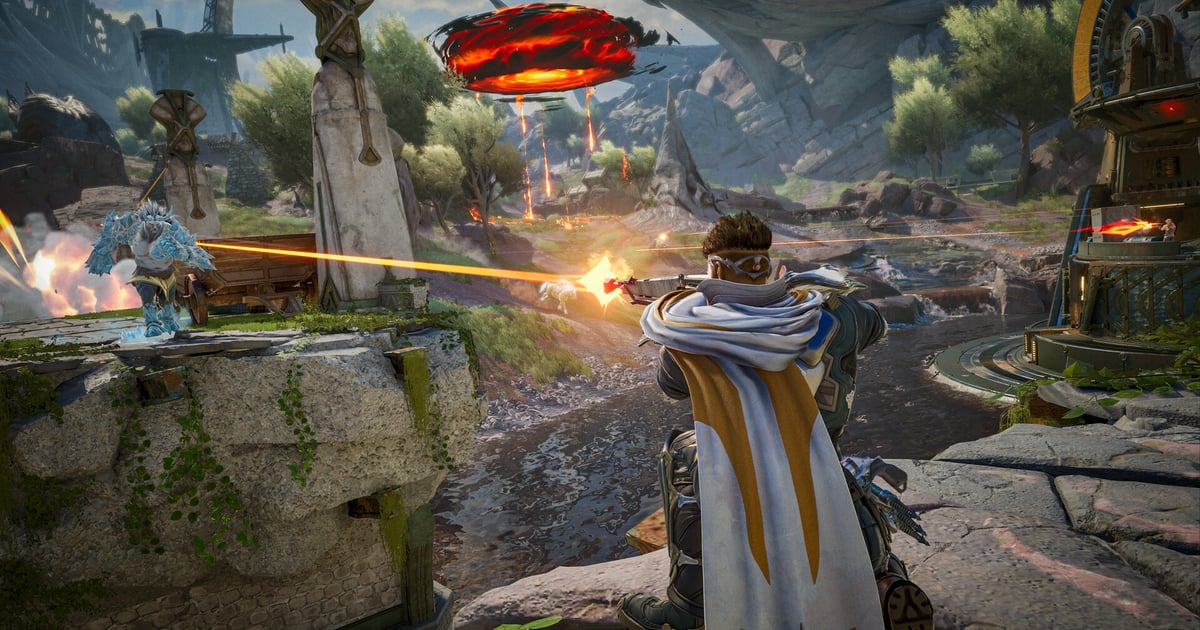
Wildlight Entertainment’s debut live service hero shooter Highguard saw signs of early promise, but the game lost players quickly and the studio all but imploded mere weeks after launch. What happened? Bloomberg’s Jason Schreier spoke with a number of developers from the team and pieced together the broad strokes.
In the piece, Schreier traces development of the game all the way to the success of Apex Legends at Respawn Entertainment, from which Wildlight Cofounder Dusty Welch and other veterans set off to start the new studio. The team was able to attract strong talent (and secret Tencent backing), and set off to make a live-service game with Rust-style survival mechanics.
Partway through development, the team made a large pivot to the design that Highguard would eventually launch with. But testing was always limited to staff and some external testers (including from Tencent’s TiMi Studio Group). Leadership failed to see the wisdom in building community and soliciting feedback from the wider world of players, as the piece notes, management “wanted to recreate what had worked with Apex Legends, which had been kept secret until it was announced and launched at the same time.”
Highguard was highlighted at The Game Awards in December, but Wildlight stayed secretive otherwise until launch on January 26. After an initial rush, players dropped off, and so did the Tencent funding. Most workers at Wildlight were laid off two weeks after launch.
A desire for secrecy may have been Wildlight’s downfall
The live-service space at the moment is an especially brutal place for a debut title, even one with a pedigree as strong as Highguard‘s. It may be precisely the skill and development know-how (at least, know-how for a recent era) that led the team down this path.
The piece notes that several workers cited “hubris” as a reason for the situation, and the fact that more public testing could’ve helped hammer out some of the issues (at the expense of the secrecy that leadership so prized) is a sticking point. While early testing was reportedly mostly positive, the game was fairly complicated to get into, and players had an easier time when developers were on-hand to answer questions and offer guidance. They also reported a better time if communication flowed smoothly—a few key points that could have possibly been highlighted if larger scale public testing was in the cards.
Source link
#prelaunch #open #testing #saved #Highguard

