


Budapest threatened to block a new package of European Union sanctions against Russia and to stall efforts to help Ukraine until Russian oil deliveries to Hungary resume.
The EU’s foreign ministers are set to meet in Brussels on Monday to discuss the bloc’s 20th round of sanctions against Moscow, a measure they hope will be approved in time to coincide with the fourth anniversary of Russia’s invasion of Ukraine on Tuesday.
In a video posted to social media on Sunday, Hungarian Foreign Affairs Minister Péter Szijjártó said he would block the sanctions package, accusing Ukraine of deliberately holding back Russian oil deliveries through the Druzhba pipeline.
“We will not consent to the adoption of the 20th package of sanctions, because we have previously made it clear that until the Ukrainians resume oil shipments to Hungary, we will not allow decisions that are important to them to be approved,” Szijjártó said.
Russian oil shipments to Hungary and Slovakia have been interrupted since Jan. 27 after what Ukrainian officials say were Russian drone attacks that damaged the Druzhba pipeline, leading to rising tensions between Budapest and Kyiv. The pipeline carries Russian crude across Ukrainian territory and into Central Europe.
For the sanctions to pass, the 27-nation bloc needs to reach a unanimous decision.
Nearly every country in Europe has significantly reduced or entirely ceased Russian energy imports since Moscow launched its war in Ukraine on Feb. 24, 2022.
Yet Hungary and Slovakia, both EU and NATO members, have maintained and even increased supplies of Russian oil and gas, and received a temporary exemption from an EU policy prohibiting imports of Russian oil.
Szijjártó also said on Saturday that Hungary will block a major 90-billion-euro ($106-billion US) EU loan to Ukraine meant to help Kyiv meet its military and economic needs for the next two years.
‘Blackmail’ by Hungary and Slovakia, Ukraine says
Earlier in the week, Hungary and Slovakia announced they would both cease diesel shipments to Ukraine over oil interruptions, and Slovakian Prime Minister Robert Fico on Saturday said his country would cut off emergency electricity supplies to its embattled neighbour if oil deliveries were not restored by Monday.
Russian missiles and drones in recent months have pounded Ukraine’s energy grid, plunging people into frozen darkness in one of the country’s coldest winters on record.
In a statement on Saturday, Ukraine’s Foreign Affairs Ministry said it “rejects and condemns the ultimatums and blackmail” by Hungary and Slovakia, and that the two countries were “playing into the hands of the aggressor.”
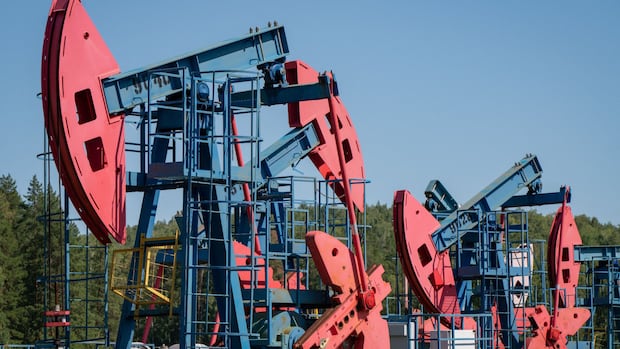
The European Union approved an 18th package of sanctions against Russia over its war in Ukraine, including sanctions that target the Russian oil and energy industry.
“Such actions, in the context of massive and targeted Russian strikes on Ukraine’s energy infrastructure and Moscow’s attempts to deprive Ukrainians of electricity, heating, and gas during extreme cold weather, are provocative, irresponsible, and threaten the energy security of the entire region,” the ministry wrote.
Viktor Orbán, Hungary’s nationalist prime minister, who maintains the closest relationship with the Kremlin of any EU leader, has long argued that Russian fossil fuels are indispensable for his economy and that switching to energy sourced from elsewhere would cause an immediate economic collapse — an argument some experts dispute.
Orbán has frequently threatened to scuttle the bloc’s efforts to sanction Moscow over its invasion and has blasted attempts to hit Russia’s energy revenues that help finance the war. He has also vetoed EU efforts to provide military and financial assistance to Ukraine.
Russian strikes hit Kyiv suburbs, killing 1
Russia attacked Ukraine with a barrage of missiles and drones, killing one person in the Kyiv region, Ukraine’s Emergency Service said on Sunday. Another eight people, including a child, were rescued from under the rubble of destroyed buildings, the service said.
The attack caused damage and fires to erupt in five districts in the suburbs of Kyiv. In the village of Putrivka in the Fastiv district, emergency first responders worked on saving people buried under debris.
Russia also struck energy infrastructure in Ukraine’s southern Odesa region, resulting in significant fires that were later extinguished, the emergency service said.
During the four years since Russia launched an all-out war on its neighbour, and despite a new push over the past year in U.S.-led peace efforts, Ukrainian civilians have endured constant aerial attacks. Russia has also ramped up attacks targeting the country’s energy grid, leaving Ukrainian civilians without electricity and heating amid harsh winter conditions.
Ukraine’s air force said on Sunday that Russia’s overnight barrage had included 297 drones and 50 missiles of various types, of which 274 drones and 33 missiles were shot down or neutralized. Of those remaining, 14 missiles and 23 drones struck 14 locations, it said. Three missiles were unaccounted for.
Separately, an explosion in Ukraine’s western city of Lviv killed one person and injured 25, Ukrainian President Volodymyr Zelenskyy said in a post on the Telegram messaging service on Sunday. One person has been arrested over the incident, which is unrelated to Russia’s aerial attack on Ukraine.
Meanwhile, Russian air defences destroyed 86 Ukrainian drones overnight, Russia’s Ministry of Defence said on Sunday.
A security guard was injured and a fuel tank set alight when two Ukrainian drones hit an oil depot in the Russian-occupied Ukrainian city of Luhansk, Moscow-installed leader Leonid Pasechnik said.
Source link
#Hungary #threatens #veto #EUs #20th #Russia #sanctions #package #halted #oil #shipments #CBC #News

