


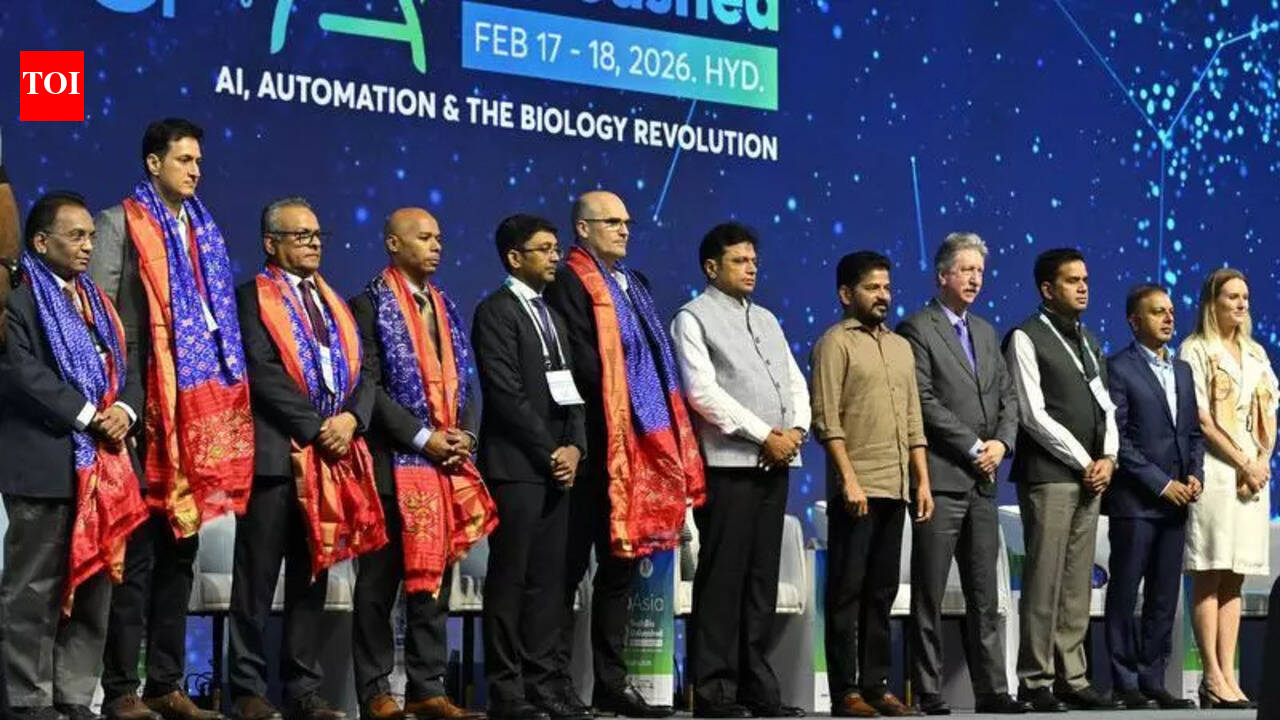
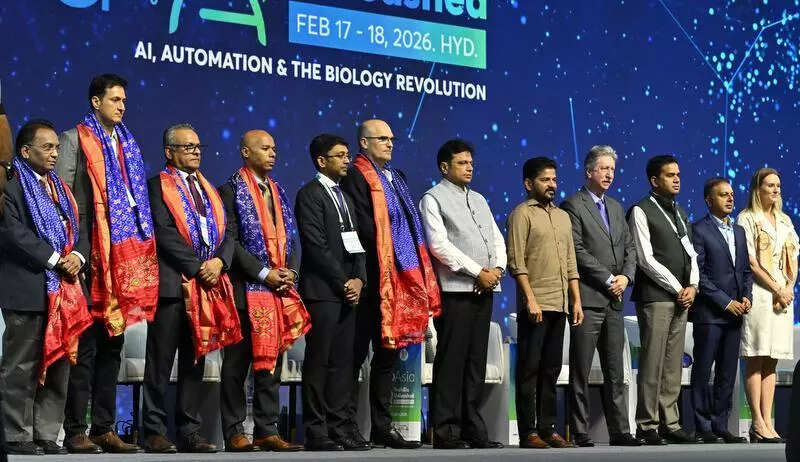
Hyderabad: India’s pharmaceutical industry is expected to remain anchored in generics and biosimilars through 2030, even as companies steadily expand into biologics, services, and capability-led business models, industry leaders said during a panel discussion on the sector’s next phase of growth.Dr Reddy’s Labs co-chairman & managing director GV Prasad said India continues to function as the “generic pharmacy of the world,” with innovation still in an evolutionary stage. He added that while the near-term mix will continue to be dominated by generics and biosimilars, the coming years should see gradual growth in biologics and in services and capabilities that move beyond cost-based competition.Biocon Biologics MD & CEO Shreehas Tambe argued in favour of India urgently shifting from cost leadership to capability leadership. He said the country has the talent base and policy intent to support innovation, but building a durable innovation ecosystem will require patience, long-term capital, and deeper collaboration between academia and industry.Artificial intelligence was highlighted as a potential accelerator for the transition. Winselow Tucker compared AI’s potential impact on drug development to India’s telecom leap, saying AI-driven R&D could compress development timelines, reduce costs, and make innovation more attainable over the next decade.From a multinational perspective, Eric Mansion said India-based global capability centres (GCCs) are moving beyond low-cost service delivery toward roles that include specialised expertise and early-stage innovation. He said outcomes will depend on execution speed, the ability to deploy AI at scale, supportive regulation, and the adoption of value-based pricing models.Panelists also pointed to structural constraints, particularly around funding. Stefan Miltenyi said significantly higher research funding and faster, predictable regulation are needed to retain global talent and enable breakthrough science. He warned that current funding levels and regulatory uncertainty can slow progress and weaken competitiveness.On policy, participants welcomed recent initiatives by the Indian govt in biosciences and clinical research, while stressing that a strong domestic market that rewards innovation is essential. China’s experience was cited as a lesson in long-term strategy and fast-follower innovation, though speakers cautioned against attempting to replicate China’s model without adapting it to India’s context.
Source link
#Biologics #set #shape #Indias #pharma #future #Hyderabad #News #Times #India

