


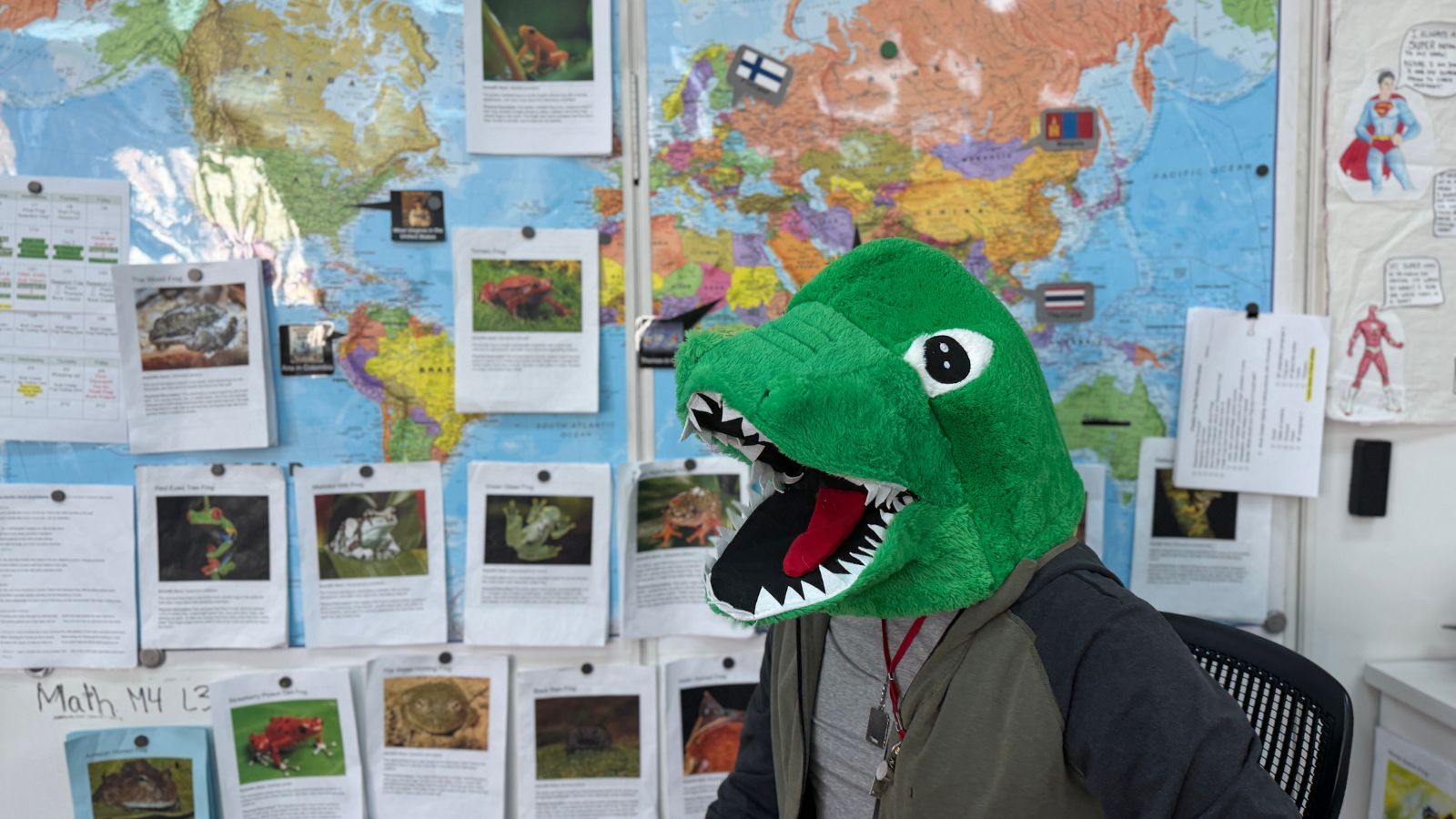
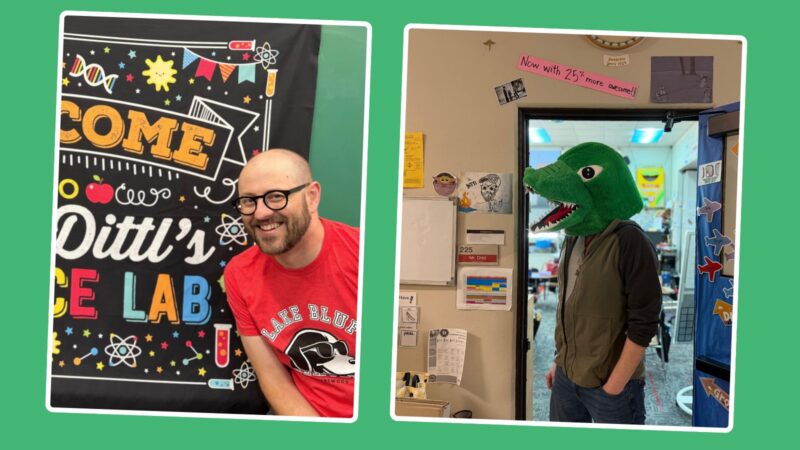
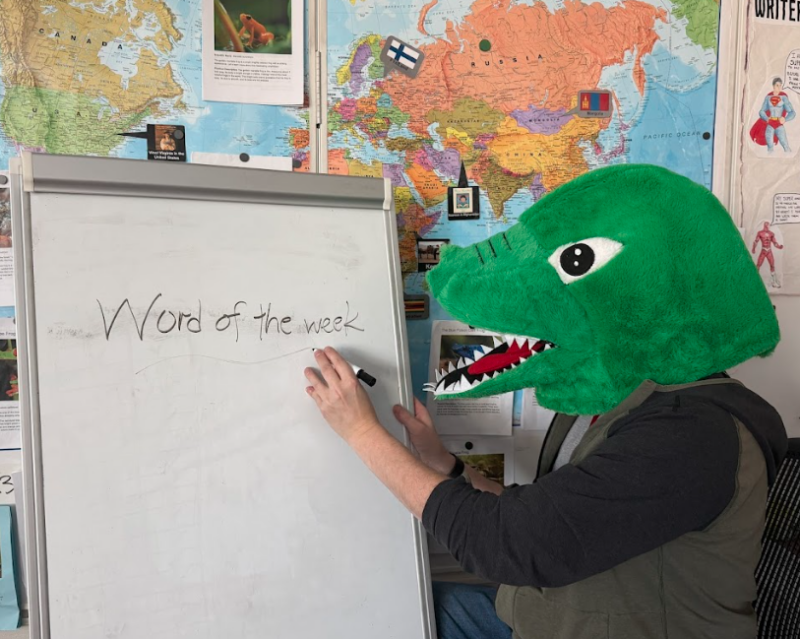
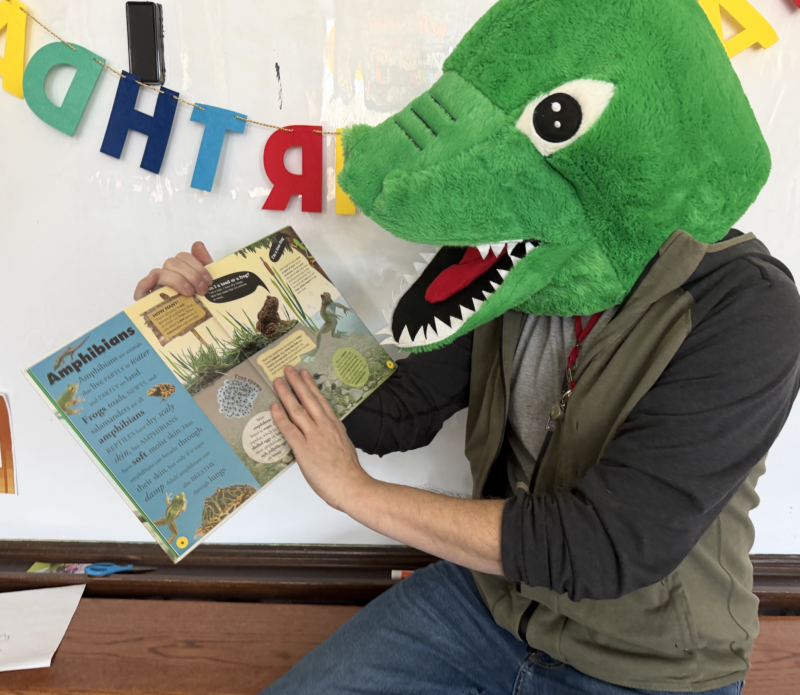
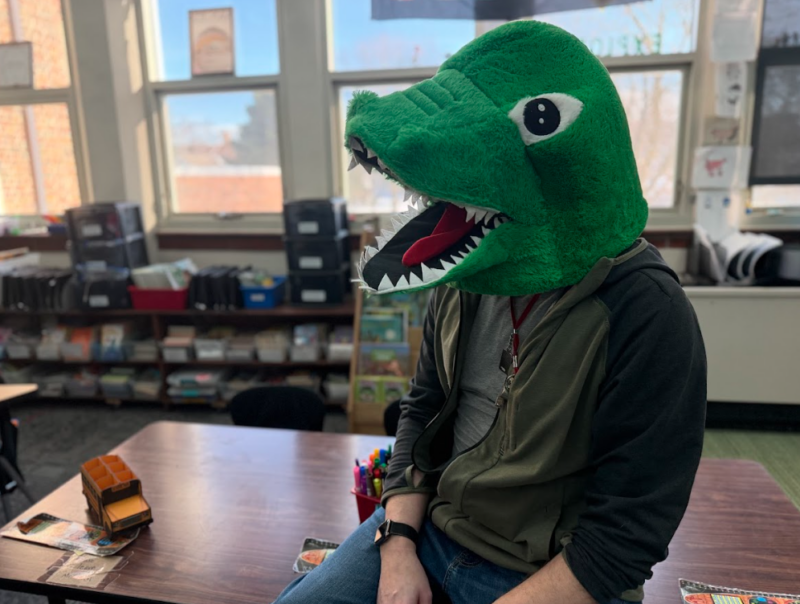
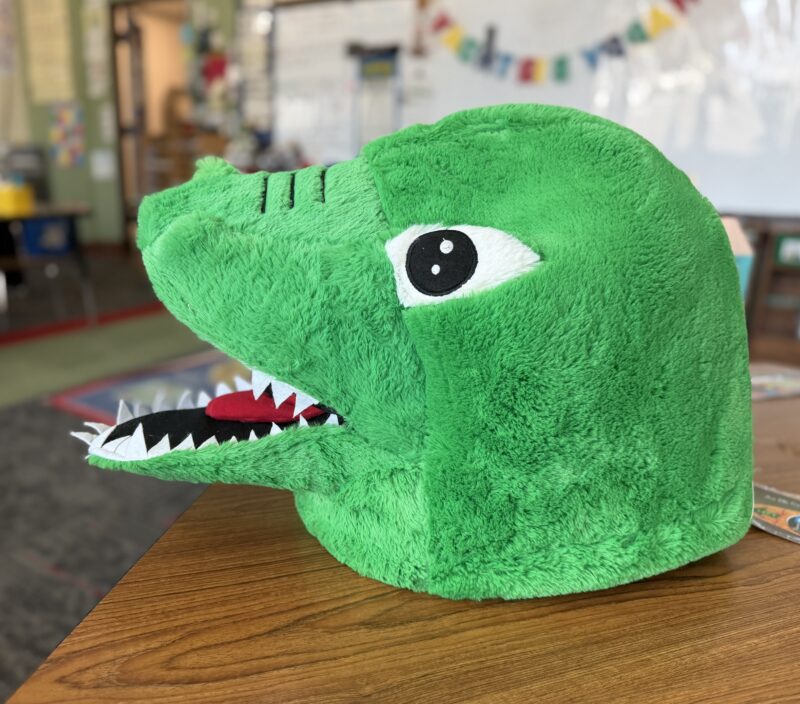
When Tom Dittl showed up to school wearing a full dinosaur head, his students were thrilled. The Wisconsin teacher had promised his class a surprise reward if they filled their “good choices” fuzzy jar, a whole‑group incentive built around teamwork and positive behavior. When they reached the goal, he followed through by teaching in a dinosaur head all day long.
The moment quickly became a highlight for students—and a reminder of how powerful low‑cost, creative incentives can be in building classroom culture. We asked this teacher to talk about the dinosaur‑head day, how he thinks about motivation in his 3rd grade classroom, and why he loves these types of rewards. Here’s our Q&A with Tom. Plus, you can find him on Instagram here.
Q: How did the dinosaur‑head idea come about?
I actually found the dinosaur mascot head while thrifting before the school year started. As soon as I saw it, I knew it would be a great class reward.
I love fun and silly surprises in the classroom. Especially in late fall and winter, student engagement can start to drag. Sometimes a little spontaneity is exactly what you need to reset the energy and restore that daily sense of wonder. The dinosaur head felt perfect.
Q: What did students have to do to earn that reward?
I use a whole‑group reward system called a fuzzy jar, which I’ve used for years. The class earns a fuzzy pom when they work together and make good choices that reflect our school values.
When other teachers compliment the class as we move throughout the building, we add a fuzzy. The idea is that success is collective. We earn rewards together by showing up as a community.
Q: Why do free rewards like this work?
I think it’s the shared experience. The novelty and humor grab their attention, but what really sticks is that everyone earned it together. It’s not about the object or the cost. It’s about creating a moment we all get to enjoy and remember as a group.
Q: Besides the dinosaur head, what other inexpensive incentives have you used?
Some favorites have been Art Day, Fort or Read‑In Day, and the Wheel of Surprise.
Art Day works because I love art, and my students know that—it’s fun to engage around a passion. Fort Day involves bringing in bedsheets and moving desks, tables, and chairs to build forts and read.
The Wheel of Surprise is a spinning dry‑erase board with simple prizes like a GoNoodle of the class’s choice, a Rock‑Paper‑Scissors challenge with me, or the fan favorite: “Mystery Surprise,” which sometimes means winning my comfy teacher chair for a lesson.
Q: Do you use different rewards for whole‑class incentives versus individual students?
Yes. Whole‑class rewards are often things like a GoNoodle movement break, a music‑and‑dance work session, or extra recess.
For individual students, I tailor rewards to what they enjoy—like lunch with a small group of friends and the teacher, helping decorate the wall behind my desk with art, or delivering something to the office or another teacher.
Q: How do you decide what will motivate this particular group of students?
Listening is huge. During crew or class circle time, I pay attention to what students talk about—movies, songs, video games, books, sports, toys. I use those interests to find pictures to print and color, music to play, or even topics for “Would You Rather?” questions. What’s motivating is constantly changing, so I have to really listen to what’s “fire,” as they say.
Q: What impact have these creative incentives had on your classroom culture?
When students realize they have real power as a group, they’re more likely to internalize expectations, rise to challenges, and redirect themselves when things go sideways.
And when individual students need one‑on‑one support for behavior, it helps to point back to community incentives they want to be part of. It reinforces that their actions ripple outward.
Q: Have any rewards surprised you by being more effective than you expected?
Scratch‑and‑sniff stickers. I loved them as a kid, and I accidentally created an entire sticker economy in my classroom. Students started tracking which “fruit smells” were out, trading them, and trying to collect them all. When I realized what was happening, I leaned into it and added special “once‑in‑a‑blue‑moon” stickers for rare days. It makes me smile.
Q: Are there any reward ideas you haven’t tried yet but really want to?
Always. I’m pretty adventurous. If I see an idea—like shaving cream on desks—I usually try it. One thing I haven’t done yet is a student‑chosen teacher challenge. I know that would be memorable.
Q: For teachers who feel pressure to spend money on incentives, what would you tell them?
Some of the best incentives are time and connection. Shared activities, lunches in the classroom, one‑on‑one time learning about a student’s interests, or taking advantage of the weather for experiments with snow or freezing things outside—those moments create joy and belonging without costing much at all.
Q: Anything else teachers should know about motivating students in creative, cost‑effective ways?
If a reward takes too long to earn, motivation disappears. That sets students up for frustration instead of success. Help your students experience success regularly, and they’ll want to earn and celebrate more often. The real payoff of classroom joy is strong relationships—and those relationships are what help you tackle the hard academic work later.
For more teacher stories like this, be sure to subscribe to our newsletters to find out when they’re posted!
Source link
#Teacher #Wearing #Dino #Classroom

